
Mechanical, Electrical, and Plumbing (MEP) Services M&A Overview
Founder-owned MEP businesses are among the most sought-after targets in today’s industrials market. SDR Ventures helps owners navigate a competitive process and close on their terms.
Last updated: July 2026
Market Overview
Mechanical, electrical, and plumbing contractors form the operational backbone of the built environment. Whether installing HVAC systems in a new healthcare facility, running electrical for a data center, or managing plumbing infrastructure across a municipal campus, MEP businesses deliver essential services that owners and developers cannot do without.
The North American MEP services market is projected to grow from $65.5 billion in 2026 to $91.6 billion by 2031, representing a compound annual growth rate of 6.9%. That growth is being driven by several overlapping forces: federal infrastructure spending, tightening energy efficiency codes, an accelerating building electrification movement, and a data center construction cycle that is placing outsized demand on electrical and mechanical contractors.
Retrofit and renovation work now accounts for roughly 47% of MEP revenue in the U.S., as aging commercial building stock requires upgrades to meet current performance and code standards.
The industry remains highly fragmented at the local and regional level. Most MEP firms are founder-owned or family-owned businesses with strong customer relationships, long-tenured workforces, and deep roots in their service territories. That fragmentation is precisely what makes the sector attractive to private equity and strategic acquirers pursuing regional consolidation strategies.
Recent M&A Activity
Featured Transaction: SDR Ventures advised Commercial HVAC Contractor
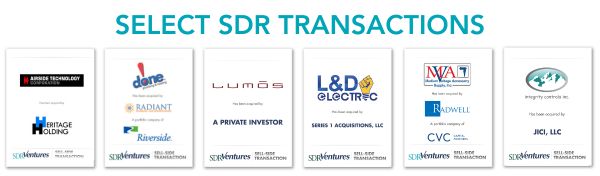
SDR Ventures served as the exclusive sell-side advisor to Airside Technology Corporation on its acquisition by Heritage Holdings.

Founded in 1984 and headquartered in East Syracuse, New York, Airside is a full-service, union HVAC contractor serving commercial, industrial, institutional, municipal, and retail customers across Central New York. The Company provides a comprehensive suite of services including controls, pipe fitting, and sheet metal fabrication, supported by an automated in-house fabrication shop. Airside’s long-tenured workforce and culture of operational loyalty made it a standout business in a competitive process.
The transaction attracted more than 50 prospective investors. Airside was ultimately acquired by Heritage Holdings, a Boston-based lower-middle-market private equity firm focused on founder-and-family-owned services businesses. Heritage Holdings operates an HVAC platform under four distinct brands.
The appetite for well-run MEP businesses has never been stronger. Airside is a great example of what happens when a business built on the right fundamentals goes through a competitive process. Business owners in HVAC, cooling, managed services, and engineering are sitting on significant value right now. The window is open and driving buyer demand at every level.
Mike Grande, Managing Director, SMB Division, SDR Ventures
Additional Market Activity
Private equity has acquired nearly 800 MEP companies since 2022, according to PitchBook data cited by the Wall Street Journal, making this one of the most actively consolidated sectors in the lower middle market. Buyer competition has roughly tripled over the past five years, with PE-backed platforms aggressively building out regional and national footprints through a combination of platform acquisitions and add-on transactions.
Deal activity in the HVAC and plumbing segment peaked at 123 transactions in 2022 before moderating to 72 transactions in 2025 as post-pandemic deal appetite normalized. EBITDA multiples followed a similar arc, rising to 8.6x in 2020 before compressing to a cycle low of 6.3x in 2024 and partially recovering to 6.9x in 2025. That recovery reflects renewed buyer competition and the enduring appeal of recurring service revenue and essential end markets.
Commercial MEP platforms continue to attract strong institutional interest. PE-backed consolidators such as Crete United (backed by Ridgemont Equity Partners), CoolSys, and Climate Pros are actively rolling up commercial HVAC and MEP contractors, drawn by recurring service contracts, data center and healthcare end-market tailwinds, and fragmented regional ownership.
On the residential side, platforms including Champions Group, Sila Services, Redwood Services, and Apex Service Partners have completed major cap-table transactions in the past 18 months, with platform-level multiples tracking in the mid-to-high teens.
Add-on acquisitions now represent more than 70% of PE deal activity in the sector, and buyers are paying add-on premiums above platform multiples in competitive situations — a reversal of the historical norm that rewards sellers who run a well-organized process.
Key Value Drivers
- Buyers of MEP businesses are focused on a consistent set of value drivers. Understanding how your business scores across these factors before going to market can meaningfully influence both the pool of interested buyers and the ultimate price.
- Service mix. Buyers place the greatest value on recurring service maintenance revenue, followed by replacement work, with new construction weighted least favorably. The most direct path to increasing enterprise value is deliberately diversifying toward service and replacement before a transaction.
- End market exposure. Data centers, healthcare facilities, and industrial buildings are among the most favorable end markets buyers underwrite today. Office buildings, public education, multi-family residential, and hospitality carry less buyer enthusiasm.
- Operational profile. Buyers look for low customer concentration, a trained and tenured workforce, well-maintained equipment, at least six months of visible backlog, and EBITDA margins above 10 to 11 percent. These characteristics signal a true turnkey operation that can be transitioned without disruption.
- Scale and fabrication capability. Businesses with in-house fabrication shops, prefabrication capabilities, or digital building systems expertise are commanding premiums as buyers pursue contractors who can handle complex, fast-track projects.
- Management depth. PE buyers in particular need a team that can operate and grow after the founder steps back. Demonstrating that leadership extends beyond the owner is a meaningful value lever in any process.
Valuation Context
EBITDA multiples for lower-middle-market MEP transactions in 2025 ranged from the low-single digits to the upper-single digits, with the median landing around 7x for the HVAC and plumbing segment per GF Data. Size and service mix drive meaningful dispersion within that range.
GF Data’s Specialty Trade Contractor cohort illustrates the size premium clearly: businesses at $10 to $25 million in enterprise value averaged 5.7x EBITDA, while transactions in the $50 to $100 million range averaged 7.1x. Businesses with recurring service revenue, favorable end market exposure, and strong operational profiles trade toward the high end of that band in competitive processes.
- Commercial MEP contractors serving data center, healthcare, and industrial end markets have consistently attracted the strongest buyer interest and pricing.
- Residential service platforms have seen cap-table transactions at substantially higher multiples, though those comps reflect platform-level pricing rather than the lower-middle-market segment that most founder-owned businesses occupy.
Sellers who run a competitive, well-prepared process consistently achieve outcomes above what an off-market or single-buyer approach produces. SDR’s process for Airside Technology Corporation attracted more than 50 prospective investors — a direct result of positioning the business to the right audience and creating genuine buyer competition.
SDR Ventures Perspective
SDR Ventures has advised MEP business owners across HVAC, plumbing, electrical, and building controls, and we understand what it takes to run a competitive process in a sector where buyer appetite is real, but diligence is rigorous.
Founder-owned MEP businesses are built on relationships, reputation, and a workforce that customers trust. Our job is to tell that story accurately and compellingly to the right set of buyers and then to create the competition that produces the best outcome. The Airside transaction is one example of what that process looks like in practice: over 50 prospective investors engaged, and a buyer in Heritage Holdings who understood the culture Steve Perry had built over four decades.
Mike Grande is integral to SDR’s Small Business Division and has advised owners across mechanical, electrical, and plumbing businesses through every stage of the transaction process. If you are thinking about what your business might be worth, or what a sale process would look like, that conversation starts here.
Ready to explore your options?
Industrial businesses are among the most actively sought acquisition targets in today’s market. If you are considering a transition, whether in the next year or in the next three, understanding your options now gives you leverage later.
SDR Ventures has the relationships, the process, and the track record to help you close on your terms. We offer a confidential, no-obligation conversation to help you think through timing, value, and process.
Contact the Industrials team to start a confidential conversation.


