
How to Respond to an Unsolicited Offer for Your Business
Last updated: July 2026
For many business owners, the first offer to buy their company doesn’t come after months of preparation or a formal sale process. It shows up in an email or a phone call from a buyer who has been watching the business, sometimes for years, and decided the time is right to make a move.
An unsolicited offer can feel flattering. It can also feel like validation that the business you built is worth something. But before you respond, or walk away, it is worth understanding what that offer actually represents, and what it does not.
Why Buyers Make Unsolicited Offers to Buy Your Business
Private equity firms, strategic acquirers, and search funds all run proactive outreach programs, and lower middle market companies are frequent targets. These buyers have identified your business through industry research, a competitor relationship, or a broader roll-up strategy, and they are reaching out directly because doing so is faster and cheaper than competing in a formal process.
That is precisely the point. An unsolicited offer benefits the buyer more than it benefits you. Without a competitive process, the buyer sets the terms of the conversation, controls the pace, and faces no pressure to sharpen their price or structure.
What an Unsolicited Offer Usually Doesn’t Tell You
A single offer, however well presented, leaves several important questions unanswered.
- Is the Price Actually Competitive?
Without other offers to compare against, there is no way to know if the number on the table reflects market value or simply what one buyer hopes you will accept.
- What’s Missing From the Letter of Intent?
Many unsolicited LOIs are intentionally light on detail. Reps and warranties, earnout triggers, working capital pegs, and other terms that materially affect your proceeds are often left vague or absent entirely.
- Who Is Actually on the Other Side of the Table?
A buyer’s track record, capital backing, and history of closing deals on the terms they propose matter enormously. Some buyers routinely renegotiate after signing an LOI, once your business is off the market and your leverage has disappeared.
- What Happens to You After Closing?
Earnouts, rollover equity, and post-close employment terms define what your life looks like after the deal, and these terms are frequently underdeveloped in a first offer.
The Cost of Exhaustion
Negotiating directly with a single buyer is rarely a quick process. It often stretches across months of calls, information requests, and revised terms, all while the owner continues running the business day to day. By the time real fatigue sets in, many owners find themselves inclined to accept whatever is still on the table simply to be done with the process, regardless of whether the terms have improved.
Buyers understand this dynamic well. A drawn-out timeline is not always an accident. The longer a deal drags on without competing interest, the more likely an owner is to accept less favorable terms just to close.
The Number on the Table Isn’t the Ceiling
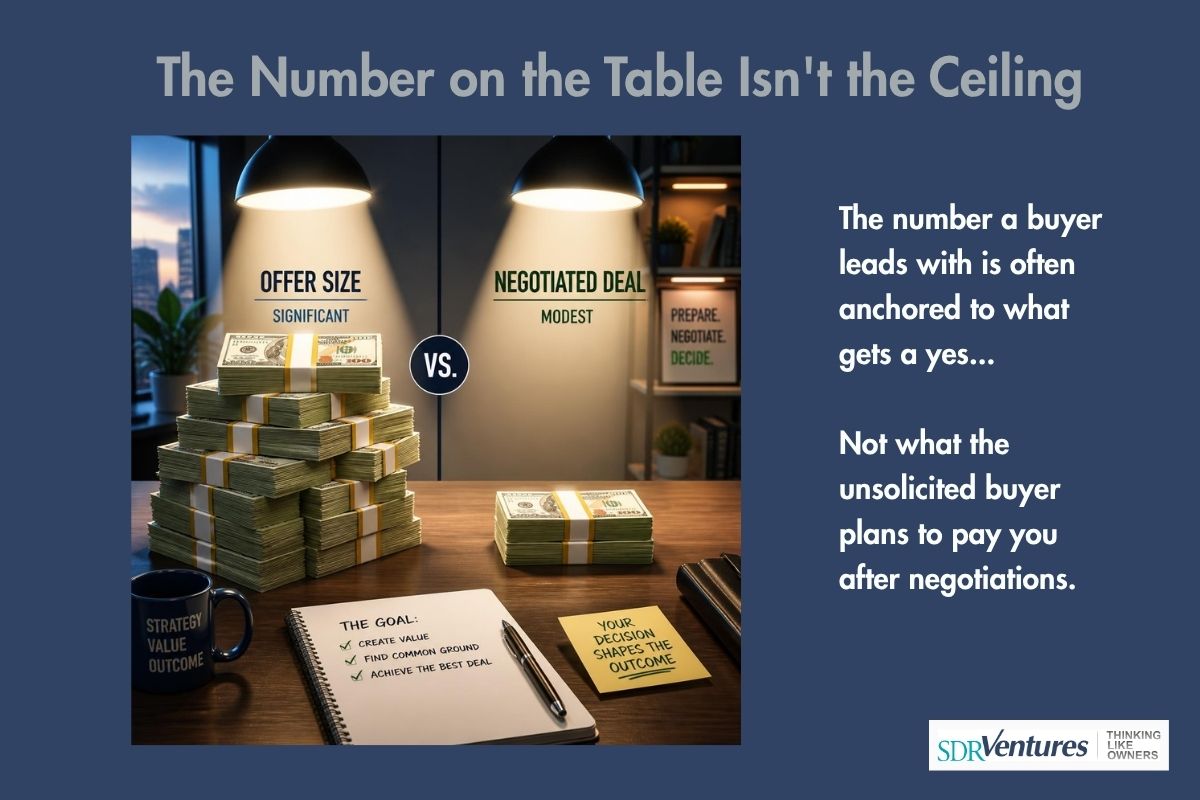
The figure a buyer leads with in an unsolicited offer is often anchored to what they believe will get a yes, not to what the business is actually worth. Without a competitive process, that number goes unchallenged. Owners have no way of knowing whether it reflects fair market value or whether a broader group of buyers would pay meaningfully more.
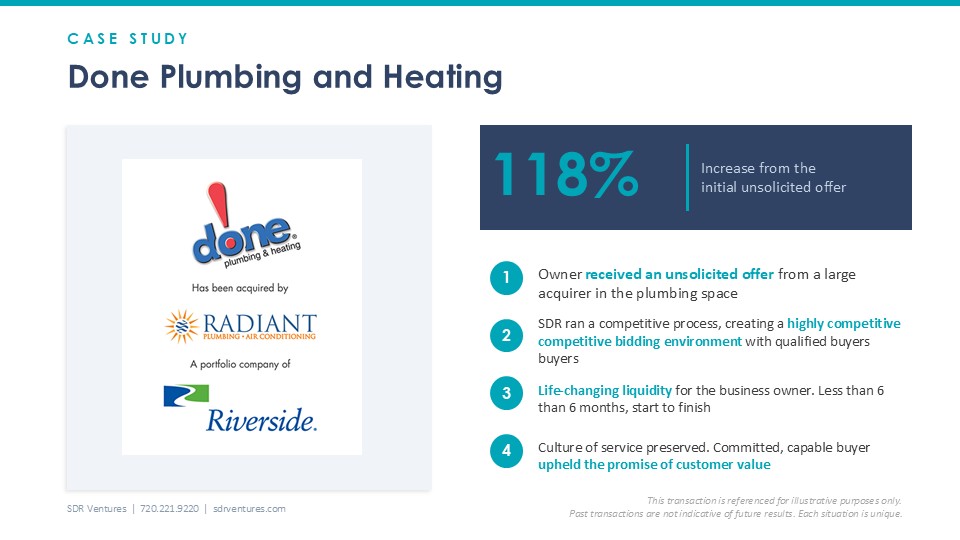
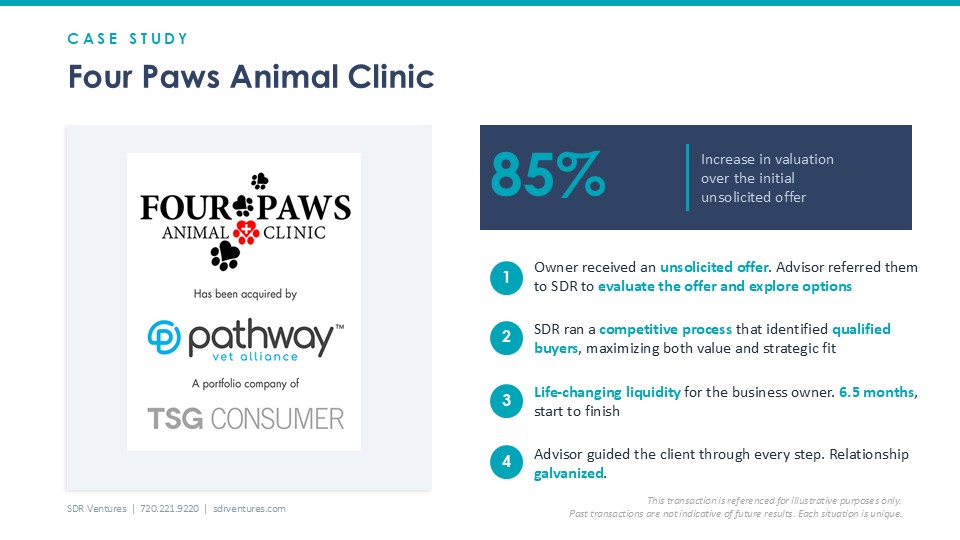
In a properly run sale process, competitive tension between multiple buyers is often what separates an average outcome from a premium one. The gap between an unsolicited buyer’s opening number and what a business ultimately commands through a competitive process can be substantial, and that gap represents real value left on the table.
The Risk of Responding to an Unsolicited Offer Without a Complete Picture
Owners who engage directly with an unsolicited buyer, without an independent assessment, often find out too late that the offer was not as strong as it appeared. By the time gaps in the structure or the buyer’s ability to close become clear, the business has often lost momentum with other potential acquirers, and the owner has lost leverage in the negotiation.
This does not mean every unsolicited offer should be rejected. Some are genuine, well-structured, and worth pursuing. But without a competitive process to test the price and terms, and without a clear read on how much runway the negotiation actually has left, most owners have no reliable way to know whether they are looking at a fair deal or a fatigue play.
How SDR Ventures Can Help With an Unsolicited Business Offer
SDR Ventures’ Unsolicited Offer Intelligence service gives owners a structured, independent review of the offer on their table before they respond. For a flat engagement fee, our team benchmarks the proposed valuation against current deal comparables, identifies gaps in the letter of intent, evaluates the buyer’s track record and likelihood of closing on the stated terms, and reviews the deal structure and its impact on your net proceeds.
The review does not include negotiating or countering the offer. It is designed to give you clarity, so that if you decide to move forward, you do so from a position of strength rather than uncertainty. If you choose to pursue a negotiated sale after the review, SDR credits the engagement fee against future fees.
The Bottom Line on Unsolicited Offers
An unsolicited offer is an opportunity, not an obligation. Before you sign anything, get a complete picture of what is actually being proposed and what it would mean for your business and your future.
Received an offer you didn’t ask for? Request your Unsolicited Offer Intelligence review.
720.221.9220 | sdrventures.com


